Is an Acid Fume Scrubber the Right Control Method?
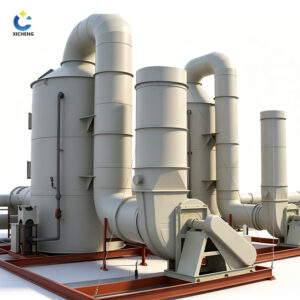
An acid fume scrubber is usually a packed or sprayed wet absorber that transfers an acidic contaminant from exhaust gas into a liquid. Its suitability depends on solubility, reaction chemistry, aerosol content, temperature and the site’s ability to manage blowdown. The equipment name alone does not establish the correct design.
Usually a good fit
- Hydrogen chloride gas or hydrochloric-acid vapor from process vents
- Water-soluble or neutralizable acidic gases with a defined outlet target
- Pickling, plating, chemical-tank and laboratory exhaust with known constituents
- Processes that can accept a recirculating liquid and controlled blowdown stream
Needs engineering review
- Mixed acids, oxidizers, NOx, chlorine or changing batch chemistry
- Fine acid mist, condensed aerosol, sticky particulate or high dust loading
- Hot gas that may need a quench or material upgrade before the packed section
- Very low outlet limits, limited footprint or restricted wastewater capacity
Another technology may fit better
- Poorly soluble organic vapors without a suitable absorbing liquid or reaction route
- Dry particulate control with no material gas-phase contaminant
- Submicron acid aerosol that requires a dedicated high-efficiency mist-control stage
- Projects that require recovery of a valuable acid rather than neutralization
Acid Fume Scrubber Selection Summary
The table below is a first screening guide. Final reagent, packing, vessel size and number of stages are confirmed only after the operating case is reviewed.
| Gas stream or source | Likely starting configuration | What must be confirmed |
|---|---|---|
| HCl gas or hydrochloric-acid vapor | Counter-current packed-bed absorber using water or an alkaline recirculating solution as the project requires | Airflow, inlet HCl, temperature, outlet target, water chemistry, pH-control basis and blowdown route |
| Pickling or electroplating exhaust | Source capture and corrosion-resistant ductwork feeding a packed tower; droplet control added as required | Tank chemistry, hood arrangement, entrained droplets, simultaneous operations and make-up air |
| Mixed acid process vents | One or more wet-contact stages selected for the least soluble or most difficult constituent | Full composition, normal and upset cases, possible salt formation, oxidation reactions and material compatibility |
| Hot acidic exhaust | Quench or spray-conditioning stage ahead of the main absorber when inlet temperature requires it | Temperature profile, moisture, condensation point, solids and allowable construction materials |
| Acid mist or condensed aerosol | Wet absorption plus a mist-control stage selected for the measured droplet-size range | Gas versus aerosol fraction, droplet distribution, visible plume, carryover limit and pressure-drop allowance |

Manufacturer Support Before You Order
Turn the Gas Stream Into a Comparable Equipment Proposal
The useful output of an inquiry is not a generic tower price. XICHENG reviews the available process data and defines the preliminary contact method, construction material, package boundary and information still needed before final sizing.
Engineering Review and Budget Quotation
Request Your Acid Fume Scrubber Proposal
Use the form to describe one operating case. Partial technical information is acceptable; clearly mark unknown values rather than estimating them.
What you receive
- Preliminary treatment approach and likely configuration
- Material recommendation based on the information supplied
- Proposed equipment scope and project options
- Budget quotation and project-specific production schedule
What to send
- Acid or pollutant name and process source
- Normal and maximum airflow
- Inlet concentration and gas temperature
- Required outlet, removal target or local permit basis
- Company and project country
- Operating hours and batch pattern
- Available footprint and connection limits
- Wastewater or blowdown restrictions
Your information is used to review and respond to this equipment inquiry. Providing a phone or WhatsApp number is optional unless it is your preferred contact method.
Acid Fume Scrubber Specification Framework
These are configuration fields for quotation comparison, not one fixed catalog model. The final values belong on the approved project data sheet.
| Specification | Available basis | Project confirmation |
|---|---|---|
| Primary duty | Absorption and, where selected, chemical neutralization of industrial acidic gas or vapor | Full gas composition and physical form |
| Reference airflow | Standard vertical wet-scrubber references cover 3,000–48,000 m³/h; larger duty can use a custom or parallel arrangement | Normal, maximum and upset airflow at stated temperature and pressure |
| Removal target | Typical project targets of 95%+ may be considered for selected soluble or reactive gases when chemistry and operating conditions match | Required outlet or efficiency, design margin and verification method |
| Contact configuration | Packed bed, spray tower, quench plus packed bed, horizontal/crossflow or multi-stage | Solubility, reaction rate, solids, mist, footprint and pressure-drop limit |
| Vessel construction | PP standard starting point; PPH, FRP and other materials available by duty | Each gas, liquid, concentration, temperature and UV/exposure condition |
| Scrubbing liquid | Water or a selected alkaline/reactive solution | Pollutant chemistry, reagent availability, salt formation and disposal route |
| Liquid control | Recirculation, make-up, level control and controlled blowdown | Water quality, evaporation, dissolved solids and discharge restriction |
| Chemical control | Manual or automatic dosing; pH instrumentation available as a project option | Control range, probe materials, redundancy, alarm and plant interface |
| Gas-liquid internals | Liquid distributor, spray nozzles, packing and packing support selected by configuration | Wetting, fouling tendency, access and cleaning method |
| Mist control | Demister or a separate higher-efficiency mist stage when required | Droplet-size basis, carryover limit and wash/cleaning arrangement |
| Fan and ductwork | Can be included or coordinated with site-supplied equipment | System resistance, material, fan location, motor supply and control responsibility |
| Documentation | Proposal scope can include configuration data, GA drawing, interface schedule and operating documents | Required language, review cycle, inspection and submission format |
Performance depends on the confirmed pollutant-solvent system, loading, contact area, liquid distribution, temperature and operating control. A proposal target is not a stack-test guarantee unless the agreed quotation explicitly defines the conditions and acceptance method.
How an Acid Fume Scrubber Works
Contaminated exhaust enters the absorber and contacts a distributed liquid over packing or through sprayed droplets. Soluble acid gas transfers into the liquid; where a suitable alkaline reagent is used, reaction in the liquid maintains the driving force for continued absorption. The recirculation system returns liquid to the contact section, while controlled make-up and blowdown manage the accumulating reaction products.
Before the treated gas leaves the system, a demister removes entrained liquid droplets. Fan selection must account for the absorber, ductwork, hood and other system resistance. For hot, dusty or aerosol-rich gas, a quench, particulate stage or enhanced mist-control section may be needed before or after the main absorber.
Construction Material Is Selected by the Complete Chemical Environment
Polypropylene (PP)
PP is the standard starting material for many ambient-temperature corrosive exhaust and recirculating-liquid applications. Final suitability still depends on each chemical, concentration, temperature, mechanical load and outdoor exposure.
PPH and FRP options
PPH or FRP may be considered where temperature, structural duty, vessel size or site conditions move beyond the selected PP configuration. Resin system and corrosion-barrier details must match the service.
Mixed-material package
Pump wetted parts, nozzles, packing, fasteners, probes, fan and ductwork do not automatically share the vessel material. Each component should be listed in the proposal so compatibility can be reviewed.
Define the Package Boundary Before Comparing Quotations
Two suppliers can quote the same “acid fume scrubber” while including very different equipment. Compare the complete air path, liquid circuit, controls, installation interfaces and documentation.
Core absorber package
- Scrubber vessel and recirculation section
- Liquid distributor or spray header
- Packing and support where selected
- Mist eliminator and access points
- Recirculation pump and basic piping as quoted
Project options
- Chemical storage and dosing equipment
- pH, level, flow and pressure instrumentation
- Corrosion-resistant fan and motor
- PP/FRP ductwork, dampers and hoods
- Quench, prefilter or additional treatment stage
Confirm responsibility
- Foundation, lifting and site assembly
- Electrical supply and plant-control interface
- Water, reagent and drain connections
- Stack, sampling point and local permit work
- Commissioning, testing and operator training
Industrial Acid Fume Scrubber Applications
Pickling and metal finishing
Capture and treatment of exhaust from acid tanks, plating lines and surface-treatment processes after the hood and duct system are defined.
Chemical process vents
Absorption of identified acid gases from reactors, mixing vessels, storage tanks, transfer points and batch operations.
Electronics and laboratories
Treatment of known corrosive exhaust from wet benches, enclosed tools or grouped fume-hood systems, with compatibility and cross-reaction review.
From Process Data to a Buildable Scrubber Package
- Define the gas stream.
Identify source, composition, normal and maximum flow, loading, temperature and operating pattern. - Select the treatment path.
Screen solubility, reagent, stages, material, wastewater and mist-control requirements. - Confirm package and interfaces.
List included equipment, footprint, connections, fan duty, controls and site responsibilities. - Approve the project basis.
Review the quotation, arrangement, documentation, production schedule and acceptance method before fabrication.
Wet Scrubber Fabrication and Installation Examples
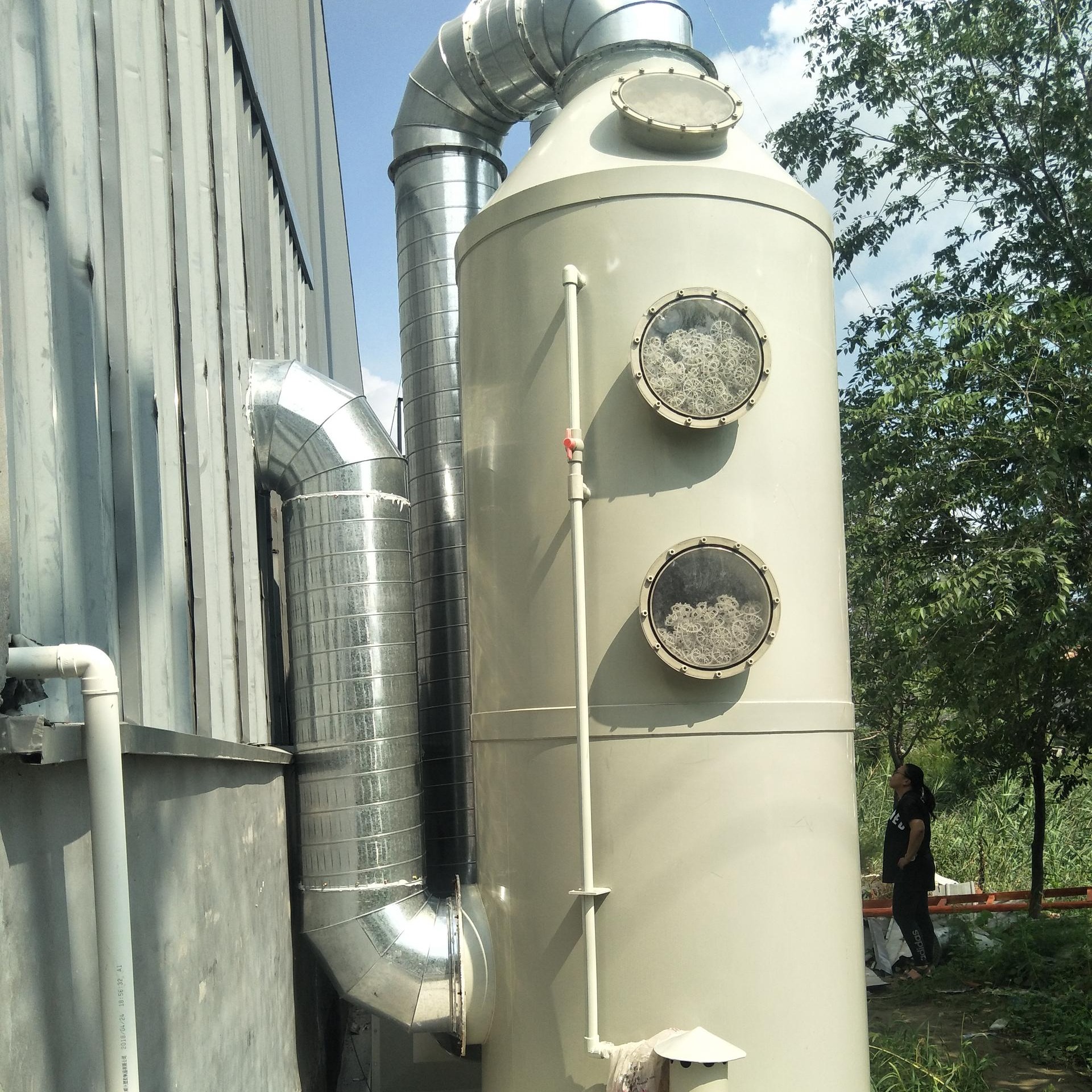
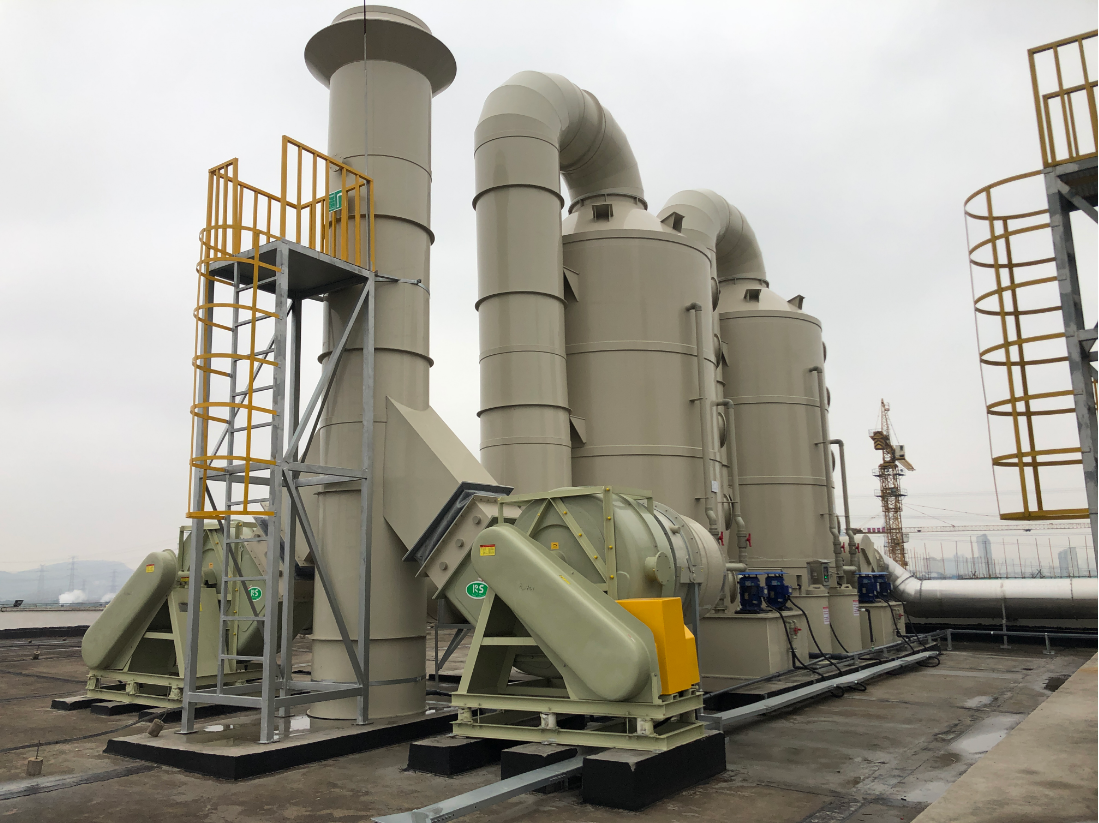
These images show XICHENG wet-scrubber construction and installed system arrangements. The final acid-fume system may use a different vessel count, duct route, fan or control package based on the project.
Inside XICHENG: Spray Tower Product Display
Watch an actual factory product display to review the tower arrangement, external fabrication and connected components. Video appearance is illustrative; the acid-fume configuration is set by the project data.
Acid Fume Scrubber Project FAQ
What pollutants can an acid fume scrubber treat?
A wet acid-fume scrubber is commonly considered for hydrogen chloride and other acidic gases that are sufficiently soluble in water or react with a selected scrubbing liquid. The full gas composition must be checked because mixed acids, oxidizers, NOx, droplets and organic vapors can require different stages or another technology.
Is water enough for an HCl fume scrubber?
Water can absorb highly soluble hydrogen chloride, but water-only operation is not automatically the best choice for every loading and outlet requirement. Recirculating water becomes acidic and its absorption capacity changes; an alkaline reagent and controlled blowdown may be needed. The proposal should state the selected liquid basis.
Does the same scrubber remove acid gas and acid mist?
Not necessarily. Acid gas is treated mainly by absorption and reaction, while acid mist consists of liquid aerosol droplets. A packed tower demister can remove entrained liquid, but fine aerosol may require a dedicated mist-control stage selected from measured or estimated droplet size.
Which data are needed to size the scrubber?
Provide the source process, every known gas or aerosol constituent, normal and maximum airflow, inlet concentration, gas temperature, operating hours, required outlet, available footprint and wastewater restrictions. Unknown values can remain unknown during the first review.
Can the fan, ductwork and chemical dosing system be included?
Yes, they can be included as project options. The quotation should clearly identify the absorber, recirculation equipment, dosing, controls, fan, ductwork, hoods, stack and installation responsibilities so proposals can be compared on the same boundary.
How is removal performance confirmed?
The design target is established from the agreed gas composition, loading, operating conditions and outlet requirement. The quotation should also define the proposed verification method, sampling location and acceptance conditions when a formal performance commitment is required.
Send One Acid-Fume Operating Case to Start
Share the pollutant, airflow, concentration, temperature, operating hours and outlet requirement. XICHENG will use the available information to prepare a preliminary configuration, scope and budget quotation, and will identify the remaining data needed for final sizing.