
PP/FRP Industrial Valve — Corrosion-Resistant Valves for Chemical & Lab Systems
A PP industrial valve — also called a polypropylene valve or plastic industrial valve — is a corrosion-resistant fluid control device manufactured from PP (polypropylene), PPH, or FRP (fiberglass reinforced plastic) for on/off isolation, flow regulation, and backflow prevention in chemical process piping, laboratory exhaust systems, water treatment, and electroplating lines. Unlike metal valves that corrode internally within months in acid or chloride service, a PP valve maintains full mechanical integrity and bubble-tight shutoff across its entire 10-15 year service life without protective coatings, cathodic protection, or scheduled replacement. XICHENG EP manufactures PP ball valves, butterfly valves, check valves, FRP valves, VAV/CAV air volume control valves, and industrial plastic valves in sizes from DN15 (1/2″) to DN300 (12″), with flanged, threaded, socket-weld, and butt-weld end connections per DIN, ANSI, and JIS standards.
The PP material choice eliminates three failure modes that plague metal valves in corrosive service: stem corrosion and seizure (PP stem + PTFE seat = zero corrosion torque), body perforation from internal pitting (PP is immune to chloride pitting and acid attack), and seat leakage from chemical degradation (EPDM or FPM seats provide full chemical compatibility). PP valves are approximately 60% lighter than equivalent 316L stainless steel valves — a DN100 PP ball valve weighs 5.7 kg vs. 16 kg for 316L — reducing pipe support requirements and installation labor. All XICHENG EP industrial valves are factory pressure-tested at 1.5× design pressure per API 598 and supplied with material certification and a 1-year warranty.
Industrial Valve Product Range
PP Ball Valve
A PP ball valve — also called a polypropylene ball valve or PP industrial ball valve — is a quarter-turn shutoff valve with a PP body, a spherical PP or PVDF ball with a full-bore or reduced-bore flow passage, and PTFE seat rings that seal against the ball in both the open and closed positions. Rotating the stem 90° aligns the ball bore with the pipe axis (open) or presents the solid ball face to the flow (closed), providing full shutoff with a pressure rating up to PN10 (10 bar / 150 psi) at 20°C. The PP body is injection-molded in two or three pieces and joined by butt-welding or bolted flanges with an EPDM or FPM O-ring body seal.
PP ball valves are the most common valve type in corrosive fluid systems because of their simple, reliable operation and low pressure drop — the full-bore design provides essentially zero additional flow resistance when open, with a Cv (flow coefficient) typically 10-20% higher than an equivalent globe valve. Double-union (true union) PP ball valves allow the valve body to be removed from the pipeline without cutting or unbolting the pipe connections — the end connectors (socket, threaded, or flanged) remain attached to the pipe while the center body section with the ball and seats is lifted out for inspection or replacement. Sizes from DN15 (1/2″) to DN100 (4″) in single-union, double-union, and flanged configurations.
| Parameter | Specification |
|---|---|
| Size Range | DN15 — DN100 (1/2″ — 4″) |
| Pressure Rating | PN10 (10 bar / 150 psi) at 20°C |
| Material | PP body + ball; PTFE seats; EPDM/FPM O-ring |
| End Connections | Socket-weld, threaded, flanged (DIN/ANSI) |
| Configuration | Single-union, double-union (true union), flanged |
PP Butterfly Valve
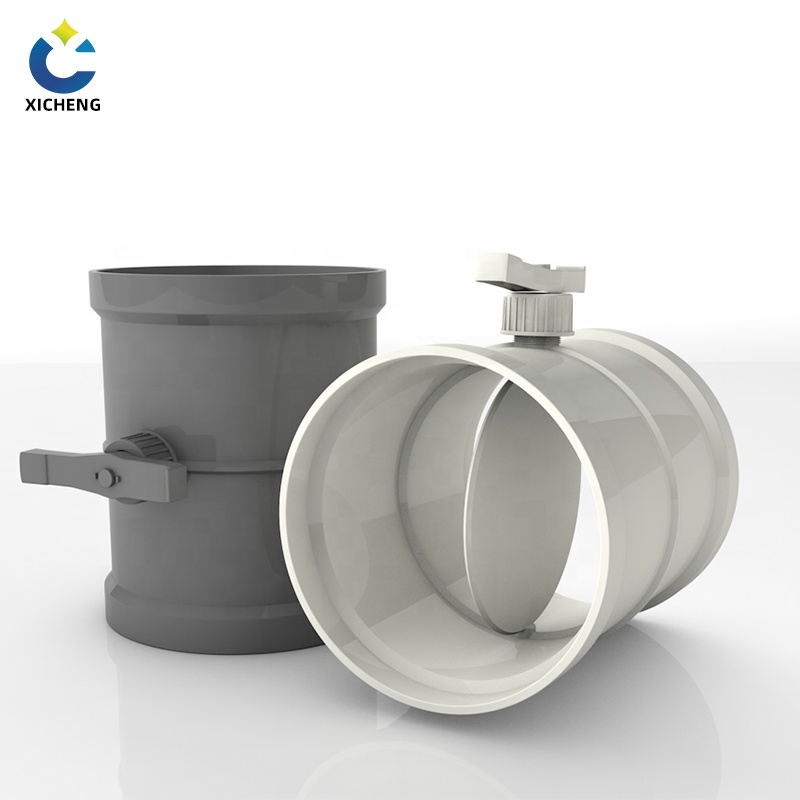
A PP butterfly valve — also called a polypropylene butterfly valve or PPH butterfly valve — is a quarter-turn throttling and shutoff valve with a PP body, a circular PP or PVDF disc mounted on a central shaft, and an EPDM or FPM seat liner that forms the seal between the disc edge and the body when closed. When the disc rotates 90° to align with the flow axis, the valve presents a very low obstruction — approximately 80-90% of the full pipe cross-section remains open — giving butterfly valves the highest flow capacity per unit weight of any valve design.
PP butterfly valves are the standard choice for larger-diameter piping (DN65 and above) where a ball valve of equivalent size becomes disproportionately heavy and expensive. A DN150 (6″) PP butterfly valve weighs approximately 4 kg and costs about 40% of an equivalent PP ball valve, making it the economic choice for main header isolation, pump suction/discharge isolation, and tank drain lines. The lever handle with a locking quadrant provides positive position indication and allows partial opening for throttling service, though butterfly valves are most commonly used for on/off isolation. An electric or pneumatic actuator can replace the manual handle for remote operation. Sizes from DN50 (2″) to DN300 (12″) in wafer (sandwiched between flanges) or lug (bolted to one flange) body styles.
| Parameter | Specification |
|---|---|
| Size Range | DN50 — DN300 (2″ — 12″) |
| Pressure Rating | PN10 (10 bar / 150 psi) at 20°C |
| Material | PP body + disc; EPDM or FPM seat liner |
| Body Style | Wafer (between flanges) or lug (single-flange bolted) |
| Actuation | Lever handle with locking quadrant; electric/pneumatic optional |
FRP Valve
An FRP valve — also called a corrosion resistant FRP valve or fiberglass valve — uses a fiberglass-reinforced vinyl ester or polyester resin body and internal components for applications where PP lacks the temperature resistance or mechanical strength required by the process. FRP valves operate at fluid temperatures up to 95°C (vinyl ester) or 120°C (novolac VE) — approximately 25-50°C higher than PP — and the glass fiber reinforcement provides 3-4× the tensile strength of unreinforced PP at equivalent wall thickness. The FRP body is fabricated by compression molding or filament winding with a resin-rich corrosion barrier (2.5 mm, 90% resin) at all wetted surfaces.
FRP ball valves and butterfly valves are specified for hot acid transfer lines, chlor-alkali plant brine and caustic piping, flue gas desulfurization slurry systems, and any application where a metal valve would require exotic alloy construction (Hastelloy C, titanium) to survive the chemical environment. An FRP ball valve with a PVDF ball, PTFE seats, and a vinyl ester body handles hydrochloric acid up to 18% at 80°C, sulfuric acid up to 50% at 80°C, and wet chlorine gas condensate at 60°C — conditions that would embrittle PP and pit 316L stainless steel. PureFlex and Conley Composites (Andronaco Industries) are established FRP valve suppliers alongside XICHENG EP’s custom-engineered FRP valve range for DN15-DN200.
| Parameter | Specification |
|---|---|
| Size Range | DN15 — DN200 (1/2″ — 8″) |
| Max Temperature | 95°C (VE) / 120°C (novolac VE) |
| Pressure Rating | PN10-PN16 depending on size and temperature |
| Material | FRP vinyl ester body; PVDF/PP ball; PTFE seats |
| Types Available | Ball, butterfly, check; flanged ends |
PP Check Valve
A PP check valve — also called a polypropylene check valve or PP non-return valve — is a one-way valve that allows fluid flow in the forward direction and automatically closes to prevent reverse flow when the downstream pressure exceeds the upstream pressure or the pump stops. The PP body houses a PP disc, ball, or swing gate that is lifted off its seat by forward flow and pressed back onto the seat by reverse flow or gravity, providing passive backflow prevention without any external actuation or power source.
PP check valves protect centrifugal pumps from reverse rotation damage during power failure, prevent tank drainage through the fill line if the pump loses prime, and isolate chemical feed lines from process backflow. Three internal designs cover different applications: a spring-loaded PP disc check valve closes quickly (0.1-0.5 seconds) and is suitable for vertical or horizontal installation; a swing check valve with a PP flapper and no spring has the lowest pressure drop and is installed in horizontal lines only; a ball check valve with a PP or EPDM-coated ball is specified for viscous or solids-laden fluids where a disc or swing mechanism might jam. Sizes from DN15 to DN150 with socket-weld, threaded, or flanged ends. The cracking pressure (minimum forward pressure to open) is 0.05-0.1 bar for spring-loaded and 0.02-0.05 bar for swing checks.
| Parameter | Specification |
|---|---|
| Size Range | DN15 — DN150 (1/2″ — 6″) |
| Internal Design | Spring disc, swing gate, or ball check |
| Cracking Pressure | 0.02-0.1 bar (design-dependent) |
| Material | PP body + internal; EPDM or FPM O-ring |
| Installation | Spring disc: any orientation; Swing: horizontal only |
Plastic Industrial Valve
A plastic industrial valve — also called an industrial plastic valve or plastic chemical valve — is the broad-category term for thermoplastic valves (PP, PPH, PVDF, PVC, CPVC) used in industrial fluid handling where corrosion resistance is the primary material selection criterion. The term encompasses ball valves, butterfly valves, check valves, diaphragm valves, globe valves, and gate valves, each available in the full range of thermoplastic materials to match the specific chemical environment and temperature range of the process. A single chemical plant may use PP ball valves on ambient acid lines, PVDF ball valves on solvent lines, and CPVC butterfly valves on hot caustic lines — all from the same valve manufacturer for consistent dimensions, pressure ratings, and spare parts.
Plastic industrial valves are manufactured to the same dimensional standards as metal valves — face-to-face dimensions per DIN 3202 or ANSI B16.10, flange drilling per DIN PN10/16 or ANSI B16.5 150 lb — so a PP ball valve drops into the same pipeline as a 316L stainless steel ball valve without modifying the pipe flanges. XICHENG EP supplies the full range of thermoplastic industrial valves in PP, PPH, PVDF, and FRP materials for process temperatures from -10°C to 120°C depending on the material selection. Each valve type and material combination is verified against the customer’s chemical environment using the ISO/TR 10358 chemical resistance database and XICHENG EP’s 16 years of field application data.
| Parameter | Specification |
|---|---|
| Materials | PP, PPH, PVDF, CPVC, FRP (vinyl ester) |
| Valve Types | Ball, butterfly, check, globe, gate |
| Size Range | DN15 — DN300 across all types |
| Standards | DIN 3202 / ANSI B16.10 face-to-face; ISO 9393 test |
| End Connections | Flanged, socket-weld, butt-weld, threaded |
VAV Valve (Variable Air Volume)
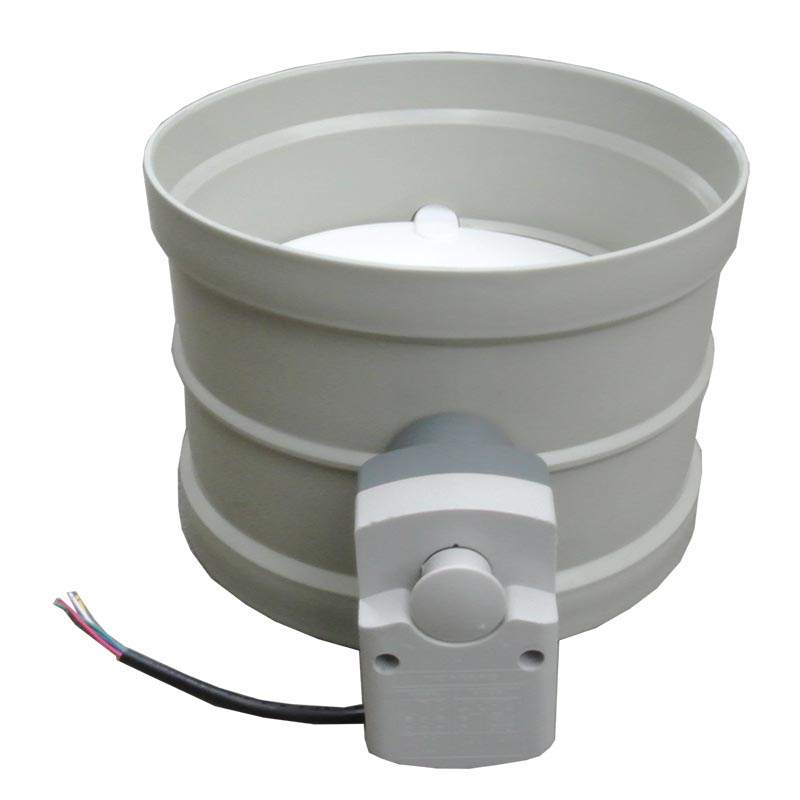
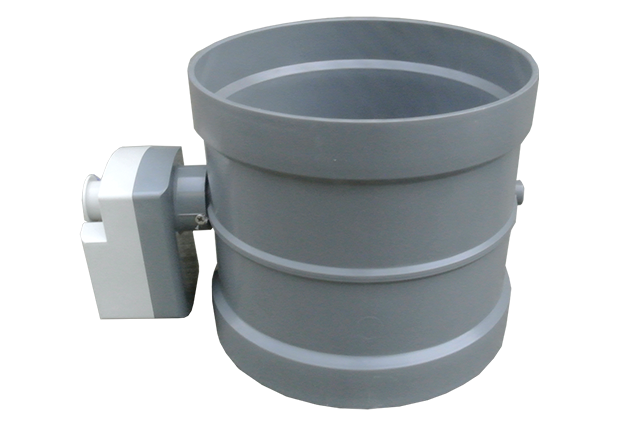
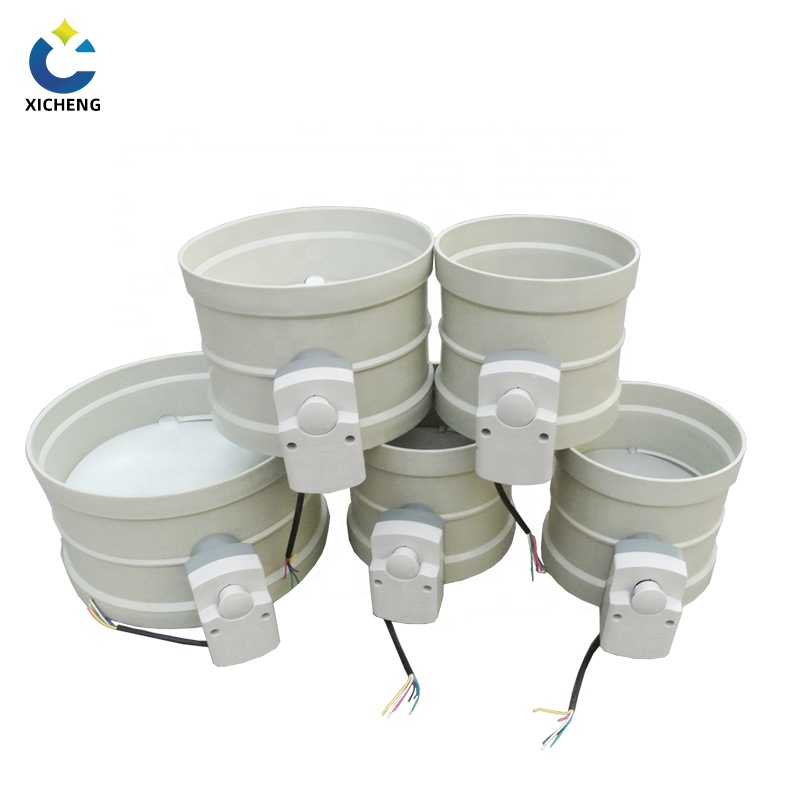
A VAV valve — also called a variable air volume valve or Venturi air valve — is an airflow control device installed in laboratory fume hood exhaust ductwork that modulates the exhaust air volume in response to the fume hood sash position, maintaining constant face velocity (0.4-0.6 m/s) regardless of whether the sash is fully open, partially open, or closed. The VAV valve uses a pressure-independent Venturi or butterfly mechanism with a fast-response electric actuator (2-5 second full-stroke time) linked to a sash position sensor or a duct velocity pressure transmitter. When the sash is lowered, the valve partially closes to reduce exhaust volume; when the sash is raised, the valve opens to increase exhaust volume. This modulation saves 40-60% of the fan and HVAC energy compared to a constant-volume system that exhausts the full design airflow at all times.
PP construction of the VAV valve body is essential for corrosive fume hood exhaust — the valve is installed in the duct carrying acid fumes, solvent vapors, and humid exhaust that would corrode a galvanized steel or aluminum valve within 12-24 months. The PP valve body with a PP or PVDF throttle plate, PTFE shaft bearings, and an EPDM or FPM blade seal maintains accurate flow control (±5% of setpoint) across a 10:1 turndown ratio (10-100% of design flow). A factory-calibrated airflow measurement station integrated into the valve body provides a 0-10V or 4-20 mA signal to the building management system for monitoring and alarm purposes. Standard sizes from DN150 to DN315 for fume hood exhaust volumes of 500-3,000 m³/h per hood.
| Parameter | Specification |
|---|---|
| Size Range | DN150 — DN315 |
| Turndown Ratio | 10:1 (10-100% of design flow) |
| Accuracy | ±5% of setpoint |
| Actuator | Electric, 2-5 sec full stroke, 0-10V / 4-20 mA |
| Material | PP body; PP/PVDF throttle plate; PTFE bearings |
CAV Valve (Constant Air Volume)
A CAV valve — also called a constant air volume valve or constant volume Venturi valve — is a self-regulating airflow control device that maintains a fixed exhaust or supply air volume regardless of duct pressure fluctuations, without external power, sensors, or control signals. The CAV valve uses a spring-loaded throttle cone or diaphragm inside a Venturi-shaped PP body: as duct pressure increases, the cone moves forward into the Venturi throat, restricting the flow area and maintaining a constant volume setpoint. The setpoint is factory-calibrated or field-adjustable by changing the spring preload, typically over a range of 50-100% of the valve’s rated flow. CAV valves are the standard specification for constant-volume fume hood exhaust, general laboratory ventilation, and supply air terminals where simplicity, reliability, and zero energy consumption are prioritized over the energy savings of VAV control.
The PP CAV valve body with a PP throttle cone, stainless steel spring isolated from the air stream by a PTFE diaphragm, and EPDM seals maintains setpoint within ±10% across a duct pressure range of 50-750 Pa. Unlike a motorized damper, there is no actuator to fail, no wiring to install, and no control signal to commission — the valve is purely mechanical and will maintain its setpoint for the life of the building with zero maintenance beyond an annual inspection. CAV valves are sized for constant exhaust volumes of 200-5,000 m³/h per hood or zone, in PP or PPs (flame-retardant) construction for corrosive fume hood exhaust or stainless steel for non-corrosive laboratory supply air. XICHENG EP CAV valves are factory-calibrated to the specified airflow setpoint and supplied with a calibration certificate traceable to ISO 5167.
| Parameter | Specification |
|---|---|
| Size Range | DN100 — DN315 |
| Flow Range | 200 — 5,000 m³/h per valve |
| Accuracy | ±10% of setpoint (50-750 Pa duct pressure range) |
| Operation | Self-regulating mechanical; no power or wiring required |
| Material | PP or PPs V-0 body; SS316 spring; PTFE diaphragm |
Industrial Valve Material Selection
| Condition | Recommended Material |
|---|---|
| Acids/alkalis at ≤70°C, general chemical service | PP (polypropylene) |
| Elevated temperature 70-95°C, strong acids | FRP vinyl ester |
| Solvents, aromatics, chlorinated organics | PVDF |
| Hot concentrated caustic, chlorine, bleach | CPVC or PVDF |
| Fume hood exhaust (corrosive, ambient temp) | PP or PPs V-0 (fire-rated) |
Frequently Asked Questions
What is the difference between VAV and CAV valves?
A VAV (Variable Air Volume) valve modulates airflow in response to a control signal — typically from a fume hood sash position sensor — to maintain constant face velocity while reducing exhaust volume when the sash is closed, saving 40-60% of fan energy. A CAV (Constant Air Volume) valve is a purely mechanical, self-regulating device that maintains a fixed airflow setpoint regardless of duct pressure fluctuations, without any external power, sensors, or control wiring. VAV valves are specified for multi-hood laboratories with diversity in hood usage; CAV valves are specified for standalone hoods, constant-volume laboratories, and applications where the energy savings of VAV do not justify the added controls complexity.
What end connections are available for PP valves?
PP valves are available with four standard end connection types: socket-weld (plain socket for solvent-free hot-gas welding to PP pipe, sizes DN15-DN110), butt-weld (plain end with matching pipe OD for butt-fusion welding, sizes DN15-DN300), threaded (BSP or NPT female threads with a PP or metal thread insert, sizes DN15-DN50), and flanged (PP loose-ring flange with a galvanized steel or SS316 backing ring drilled to DIN PN10 or ANSI 150 lb, sizes DN15-DN300). Double-union ball valves combine a socket or threaded end connector with a removable valve body for inline serviceability.
Can PP valves be used with compressed air or gas?
PP valves are rated for liquid service up to PN10 (10 bar / 150 psi) at 20°C. For compressed air or gas service, the pressure rating is derated to PN6 (6 bar / 90 psi) due to the higher stored energy of compressed gas and the risk of brittle failure if the valve body is impacted while pressurized. PP valves in compressed gas service should be protected from mechanical impact (guards or enclosures) and should not be used for oxygen service unless specifically cleaned and certified for oxygen use, as PP can ignite in pure oxygen under adiabatic compression conditions.
Get an Industrial Valve Quote
XICHENG EP manufactures PP, PPH, PVDF, and FRP industrial valves — ball, butterfly, check, VAV, and CAV types — in sizes from DN15 to DN300. Every valve is factory pressure-tested to API 598 and supplied with material certification, a dimensional drawing, and a 1-year warranty. Contact our application engineers with your pipe material, chemical environment, operating temperature and pressure, and required flow coefficient (Cv or Kv) for a valve selection and quotation within 48 hours.
About XICHENG EP
XICHENG EP LTD is an industrial air pollution control equipment manufacturer with 16+ years of production experience, 2,600+ systems shipped, and installations in 60+ countries. We manufacture in China, with in‑house PP sheet extrusion, CNC cutting, hot‑gas welding, and FRP filament winding — every scrubber component from raw material to finished vessel is fabricated under one roof. No outsourced fabrication, no subcontractor delays.
Core Advantages
- In‑house manufacturing: PP fabrication, FRP winding, and electrical assembly in one facility. Material traceability from resin batch to finished system
- Pre‑assembly testing: Every scrubber is dry‑assembled and water‑tested in our shop before crating. What arrives on site fits
- Documentation package: P&ID, GA drawing, O&M manual, material certs, and performance test procedure — ready for permit submittal
- Material selection guidance: We recommend PP, FRP, or dual‑laminate based on your gas chemistry, temperature, and budget — not our inventory
- After‑sales support: Remote commissioning via video call, 10‑year spare parts availability, 1‑year warranty on workmanship and materials
Certifications and Compliance
- CE Marking — Machinery Directive 2006/42/EC, EMC Directive 2014/30/EU
- RoHS — 2011/65/EU compliant materials throughout
- ISO 9001:2015 — Quality management system
- ISO 14001:2015 — Environmental management system
- SGS material testing — PP sheet, FRP laminate, weld integrity verified
- Design basis per EU 2010/75/EU Industrial Emissions Directive
- Engineered to meet US EPA NESHAP and OSHA 1910.94
How to Order
- Send your operating data: Gas flow rate (CFM or m³/hr), contaminant type and inlet concentration (ppm), required outlet limit per your permit, gas temperature, and available site footprint. Contact our engineering team
- Receive your proposal: Within 48 hours — preliminary sizing, process flow diagram, budget price, and delivery timeline. No obligation
- Review and approve: Once the proposal meets your requirements, we issue a formal quotation with detailed technical specifications
- Drawing approval: P&ID, general arrangement, and electrical schematic for your sign‑off before fabrication begins
- Manufacturing and testing: 6‑10 weeks fabrication. Pre‑shipment water‑tightness test, recirculation test, and control system checkout
- Shipping and commissioning: Containerized sea freight or air freight worldwide. Remote commissioning support via video call included; optional on‑site supervision available
Global Shipping
We ship wet scrubber systems worldwide from our manufacturing facility in China. Regular containerized sea freight to ports in North America (Los Angeles, Houston, New York), Europe (Rotterdam, Hamburg, Antwerp), the Middle East (Jebel Ali, Dammam), Southeast Asia (Singapore, Port Klang), and Australia (Sydney, Melbourne). Air freight available for urgent deliveries and smaller systems. All equipment is crated, shrink‑wrapped, and container‑loaded with desiccant for ocean transit.
Reviews
There are no reviews yet.